
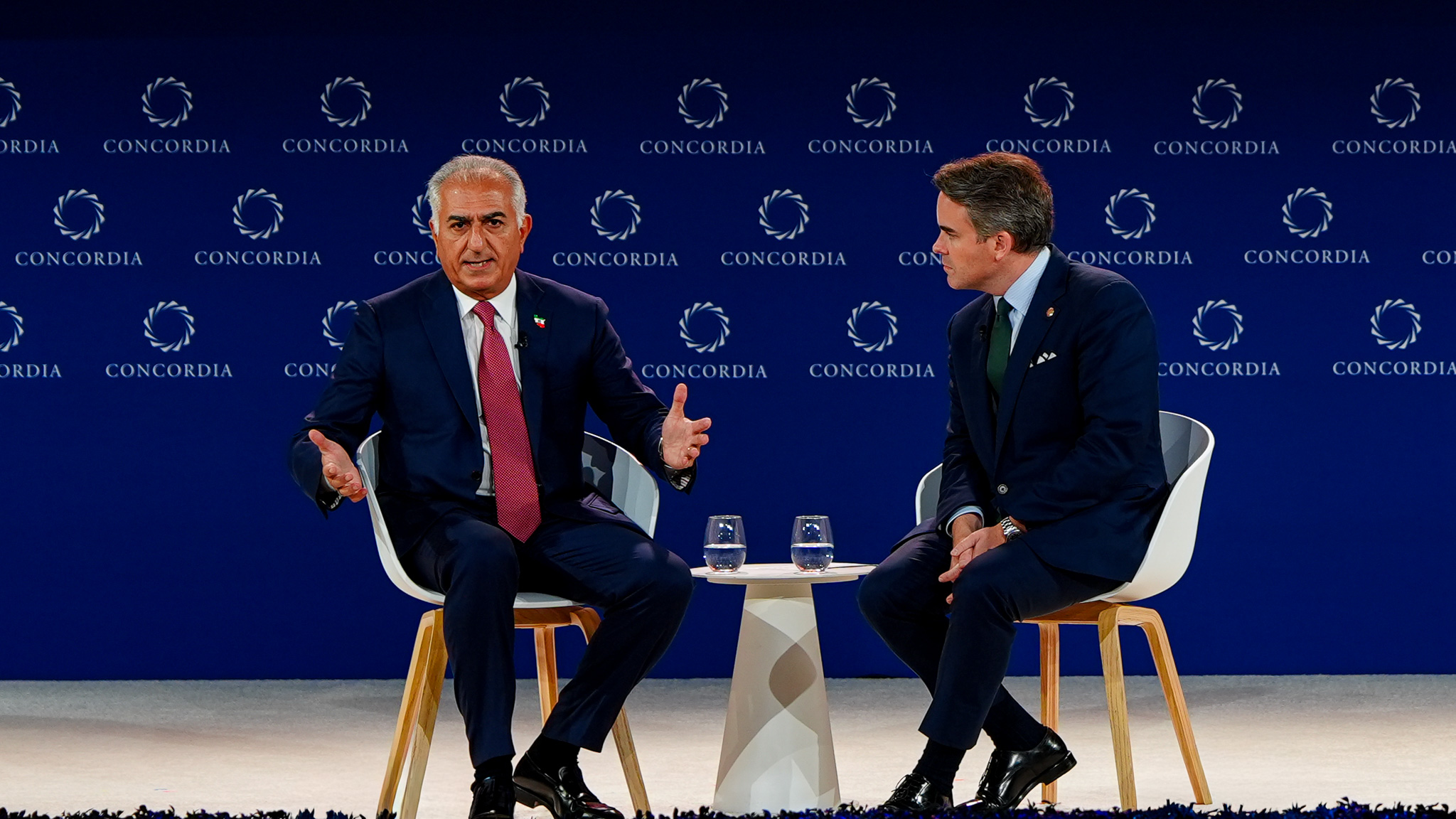
HRH Reza Pahlavi at Concordia: "The Boots on the Ground Are Iranian"
By Andy Alem (آیین) | The New Persian Times | September 24, 2026
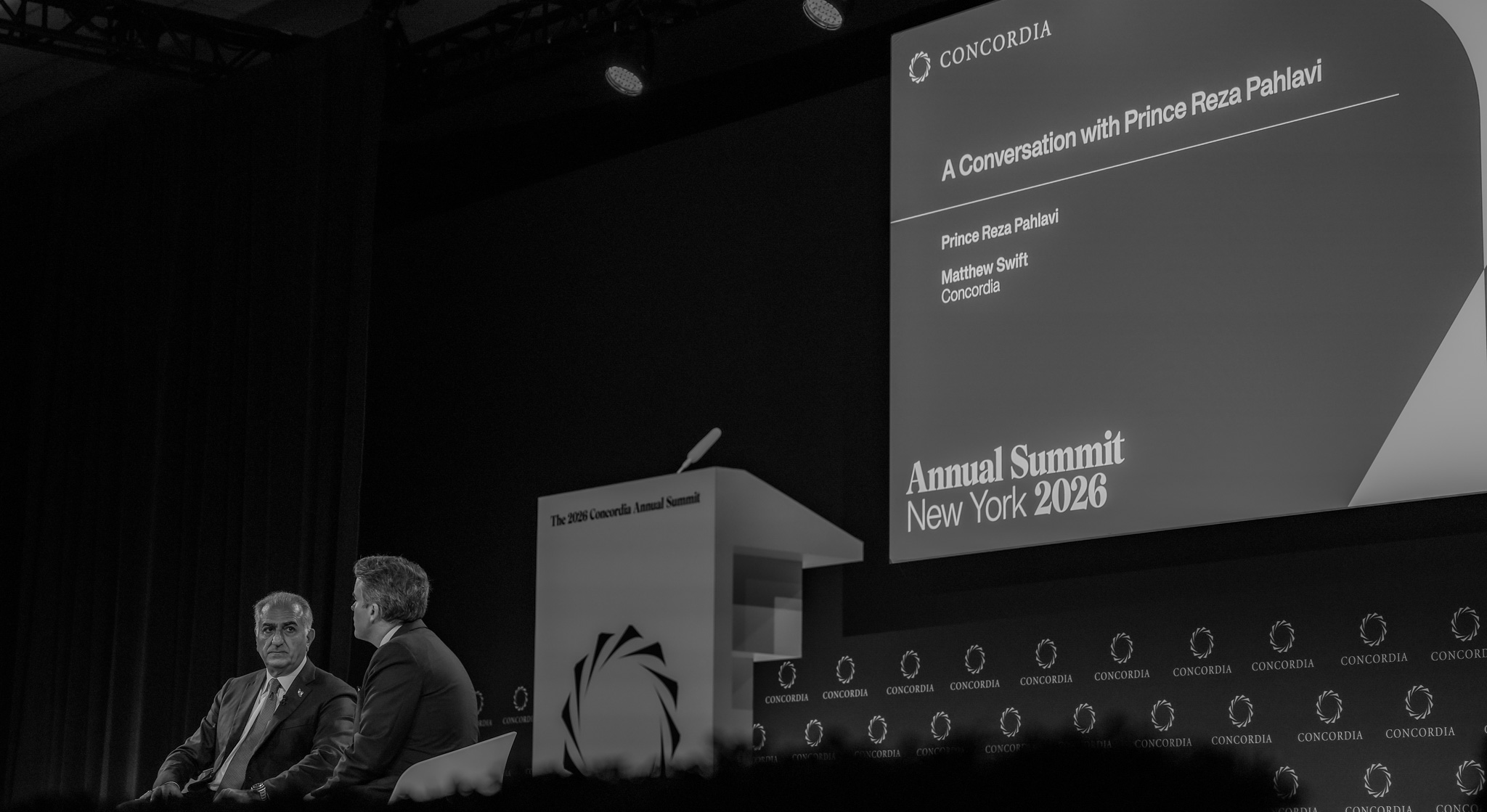
It was the week the whole world came to New York. Presidents and prime ministers filled Midtown for the 81st United Nations General Assembly. Motorcades choked the avenues. And on Tuesday morning, while President Trump addressed the General Assembly with Iran as one of its central themes, a few blocks away in Times Square, the man who has carried Iran's cause in exile for forty-six years took the stage at the 16th Concordia Annual Summit.
Crown Prince Reza Pahlavi had nearly not made it. Air traffic control problems at Newark the day before had thrown travel into chaos. He came anyway. He always does.
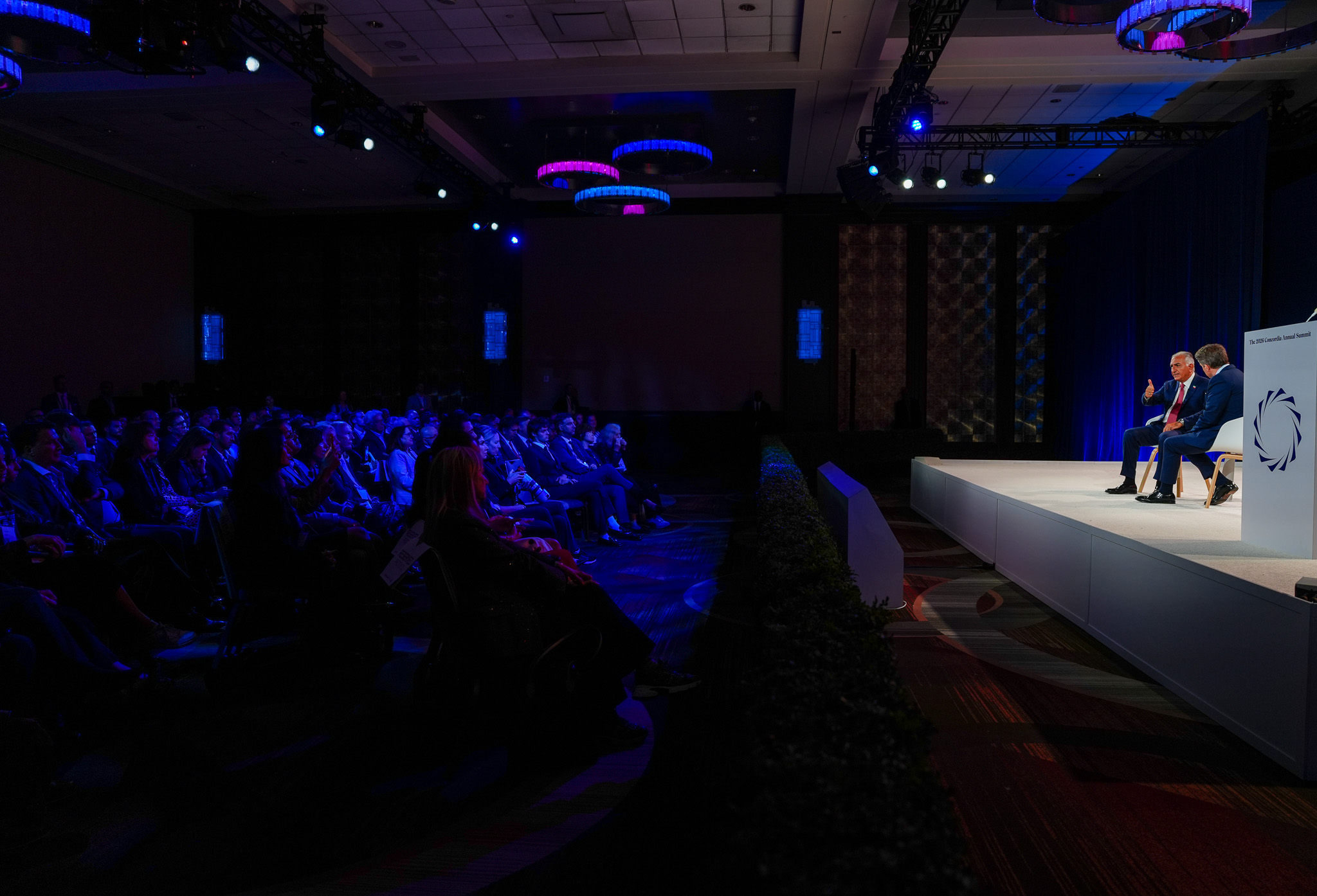
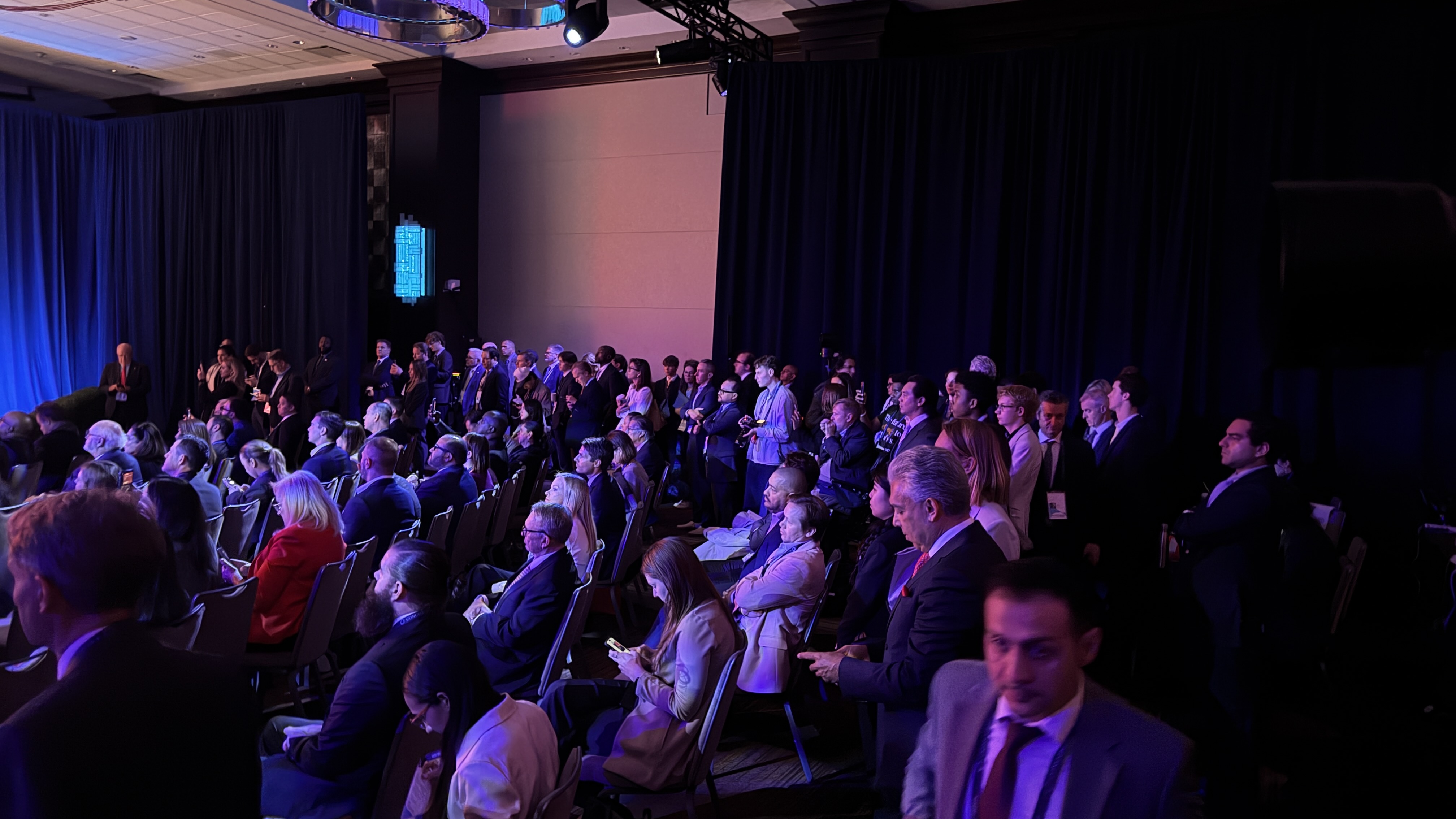
I was there, and the room was packed. What he delivered in fifteen minutes was the clearest case I have heard for a free Iran. It wasn't a plea for sympathy. It was a business case, a security case, and a moral case, all together, spoken plainly to a room full of the people who shape policy and capital. Later that day, he carried the same message to millions of American homes in a live interview on Fox News with Martha MacCallum.
Before the fire
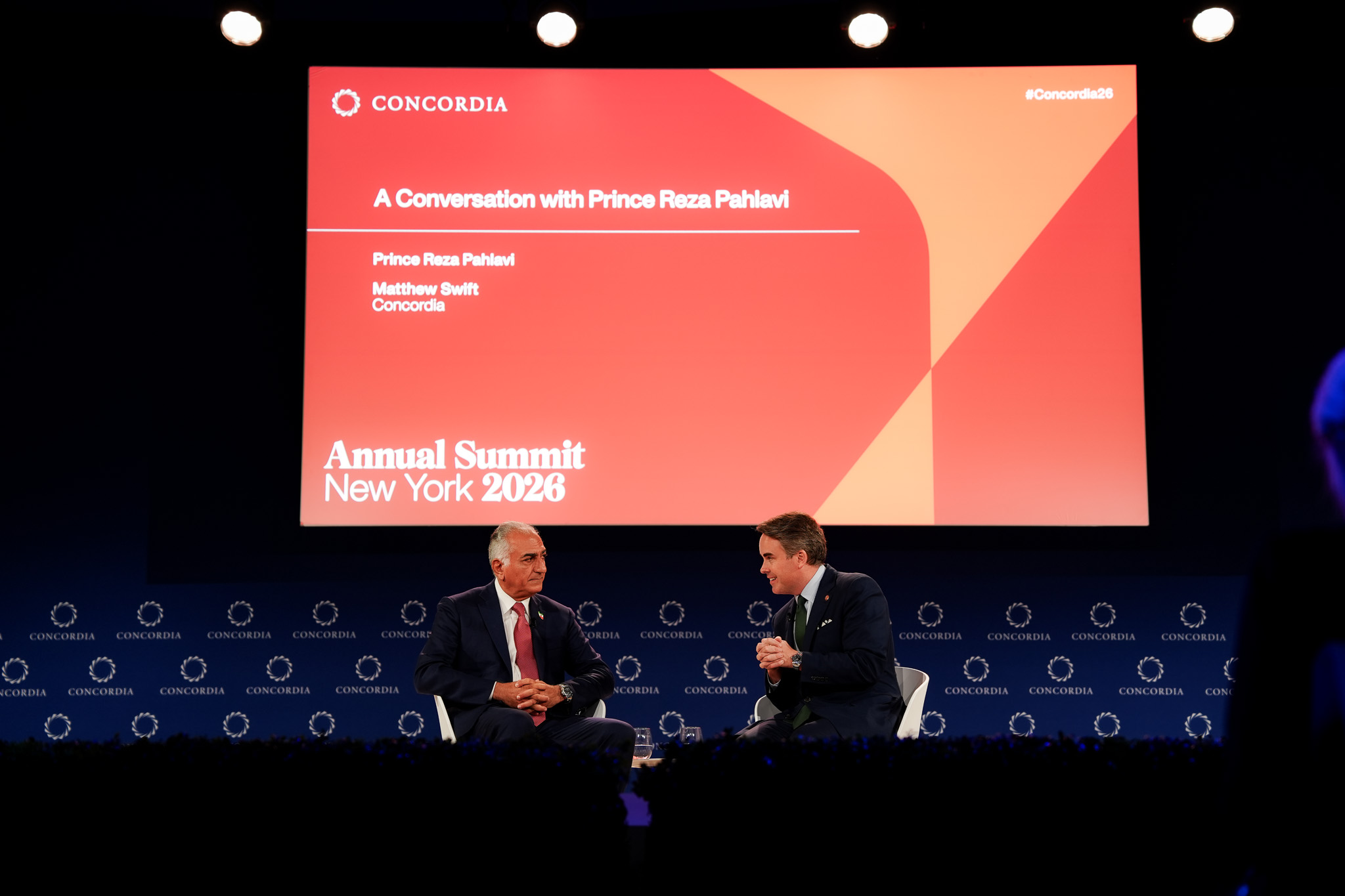
Concordia's Matthew Swift opened with the big question: after so many decades of isolation, where has Iran been, and where is it going?
The Crown Prince began by looking out at the room. "I see a lot of young faces," he said. Then he told them about an Iran most of them never knew. An Iran at peace with its neighbors. Daily El Al flights from Tel Aviv to Tehran, "instead of having missiles hitting Tel Aviv every day under this regime." A father who counted Sheikh Zayed, King Khaled, and President Sadat among his friends. Close ties with the Hashemite Kingdom of Jordan. A regional alliance with Pakistan and Turkey. A country that kept its corner of the world stable.
Then, he said, "Marxists and Islamists come together," and the era of radicalism began: Hezbollah, Hamas, the Houthis, the nuclear threat, and terrorism that has now spread "all over Europe and even to the shores of the Western Hemisphere."
"That cannot be the future for any of us."
The people are the answer
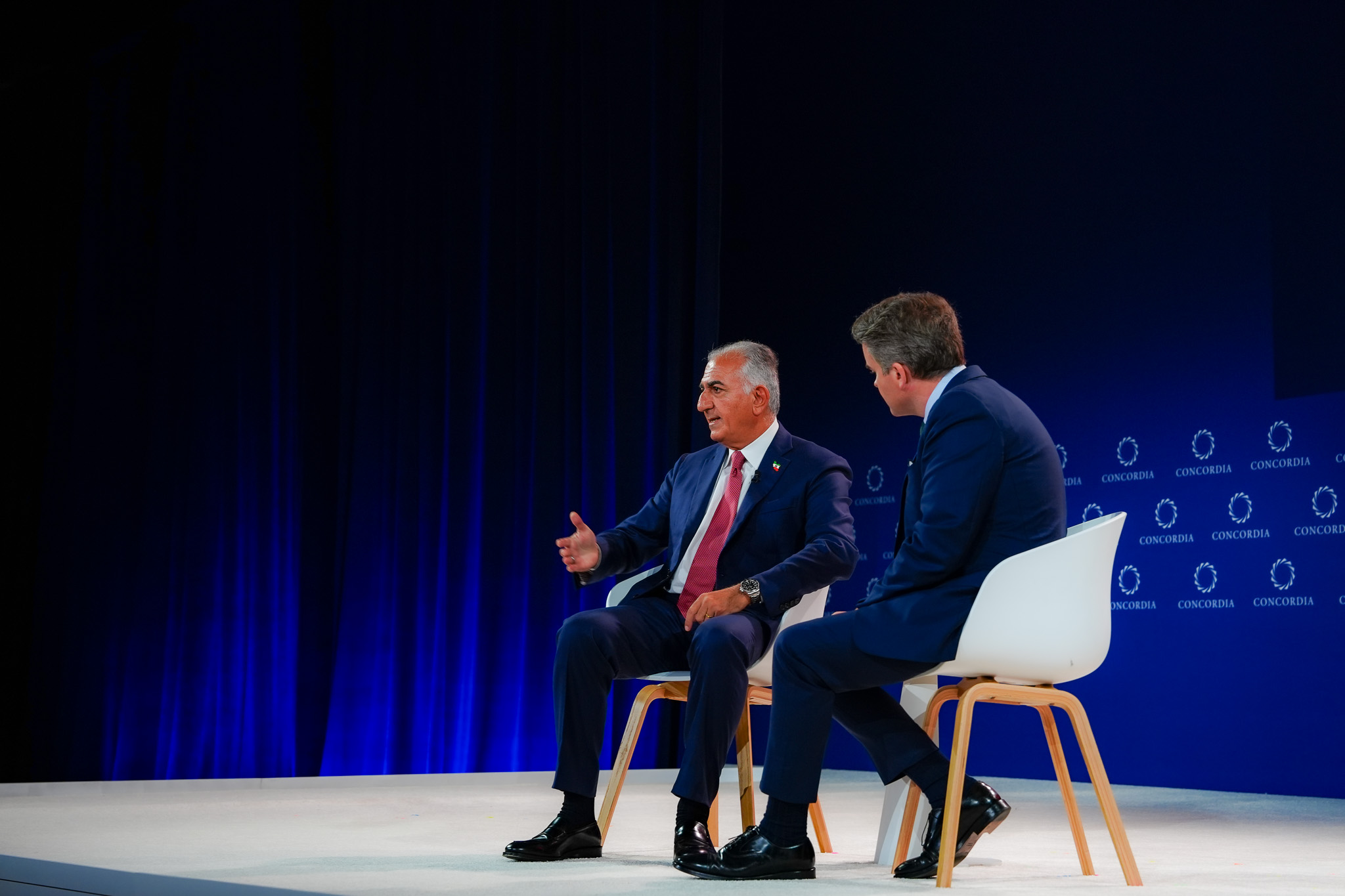
Then came the line he says he repeats to every audience, and the one that should be printed on the wall of every foreign ministry in the world:
Why are not the Iranian people themselves the center of the discussion?
For forty-seven years, the West has negotiated with the regime, appeased it, and waited for it to change. His answer to that hope was blunt. The regime will not change its behavior or its DNA "by miracle." "It's not going to happen. So don't expect it from the regime."
The Iranian people are a different story. Their values, he said, are aligned with the Western world, and with America most of all. He reminded the room what those people have paid for them. By his account, 40,000 Iranians were massacred in a single night on the streets of Tehran, "demanding freedom, demanding equality, demanding liberty, demanding democracy, demanding freedom of religion, the right to live peacefully."
"That's the nation that are going to be your partners."
And he said something every Western diplomat should hear: "Those brave souls have not died on the streets of Iran for a nuclear deal or for the Strait of Hormuz. They have died for liberty."
The room applauded. It should have.
What's in it for you
The Crown Prince knows his audience. Concordia is a room of CEOs, investors, and policymakers, so he answered the question they were all thinking: what's in it for us?
His answer was "economic opportunities unprecedented in modern history." Iran, he said, is untapped ground that has been cut off from America for forty-seven years. Then he gave the numbers that tell the whole story. In 1978, Iran's GDP was twice that of South Korea. Today, he noted, South Korea's is five times Iran's. Iran has 93 million educated people and some of the richest natural resources on earth, and none of that was the problem. The only thing standing between them is "a very corrupt system."
"Had it not been for the revolution," he said, "Iran today should have been the South Korea of the Middle East at the very least. Instead, it has become the North Korea of the Middle East."
I have not heard the last forty-seven years summed up better than that.
He took the argument beyond America, too. A free Iran could help end Europe's energy dependence and its winter blackmail from Moscow. For the Gulf, it would mean "Iranian exports landing in their ports and shores as opposed to missiles that are hitting your high-rises now from Kuwait City to Dubai."
"That's the only win-win formula."
No marines, no tax dollars
Then he answered the fear that has hung over every American conversation about Iran since the war began. Americans are tired. They remember Iraq. They don't want to send their sons and daughters to fight another war, and they don't want to pay for it either.
His response is the line I keep coming back to:
"The good news is that the boots on the ground in Iran are the people of Iran themselves. Doesn't have to be an American marine."
He added that not a penny of American taxpayer money needs to fund it. According to the Crown Prince, more than a hundred billion dollars of Iranian assets sit frozen around the world, and that is the Iranian people's own money. It could be put to work for their liberation. "It's a matter of policy," he said. "It's a matter of a reset."
A 27-year-old in a cell
Swift shared a question another speaker had asked him in the green room: if the Crown Prince were 25 years old and living in Iran today, what would he be thinking?
He answered with a real person. A young man who was shot in the eye during the Woman, Life, Freedom uprising. He was treated in Germany, recovered, and then did the unthinkable: he went back to Iran to keep fighting. He is 27 years old. He has been arrested and is sitting in solitary confinement, potentially awaiting execution.
"A 27-year-old inside Iran today is thinking: when can we ever be liberated?" That is the mindset of Iran's Gen Z, he said. They are fed up, ready to fight "to the death if necessary," and asking only for the right to decide their own future.
He called it "a moral obligation" of Western democracies to stand with them, and warned that the regime's negotiators are "just trying to buy time."
"Enough is enough. Enough time wasted."
And then he voiced the question that young man is asking the free world from his cell:
"Are you standing with me? Or are you going to throw me under the bus one more time?"
A life in a holding pattern
The most personal moment came when Swift, with the Crown Prince's wife and daughters in the audience, asked him to describe his life today.
He took us back to July 1980, when his father died in exile in Cairo. Two months later, Saddam Hussein invaded Iran. The young Crown Prince was fresh out of U.S. Air Force pilot training at Reese Air Force Base in Texas, stranded outside a country that had just had a revolution. He sent a telegram to the chief of staff of the Iranian Air Force volunteering to come home and fly against the invader. He did it knowing full well that the revolutionary regime might do him harm.
"My dedication was to serve my homeland," he said. "And 46 years and counting, my sole mission in life has been that."
His family has lived in freedom, protected by law, without fear. But, he asked, "how could we possibly sit here when we know that every single Iranian in Iran today is suffering under tyranny?" He made clear this was not because they are royal: "because it is our patriotic duty to help." Their life, he admitted, is "practically in a holding pattern," waiting on how history unfolds.
"The fight continues until Iran is finally free."
I have had the immense honor of meeting His Royal Highness in person. What that room saw on Tuesday is exactly who he is. He is not a man chasing a throne. He is a son who never stopped trying to go home.
Poland 1985, Poland 2026
For his closing, he asked the world to look at history. South Africa after apartheid. Poland and Czechoslovakia after the Soviet collapse. "Where Poland was in 1985 as opposed to where Poland is today in 2026 will immediately show you how different the world can be when you get rid of a totalitarian system."
He shared the future he sees for the region: neighbors working together on security so they can spend their budgets "on hospitals and healthcare and environmental issues rather than building missiles and nuclear weapons." His biggest worry, he said, is Iran's water crisis. "We don't have time for war. We don't have time for conflict. We don't have time for religious ideology dominating our scene."
"Your gain is my gain and vice versa. It should not be zero sum."
And the final words, which I believe with my whole heart:
"This is not just a slogan or a distant dream. It existed before. It can be ten times better in the future."
Then, on Fox News
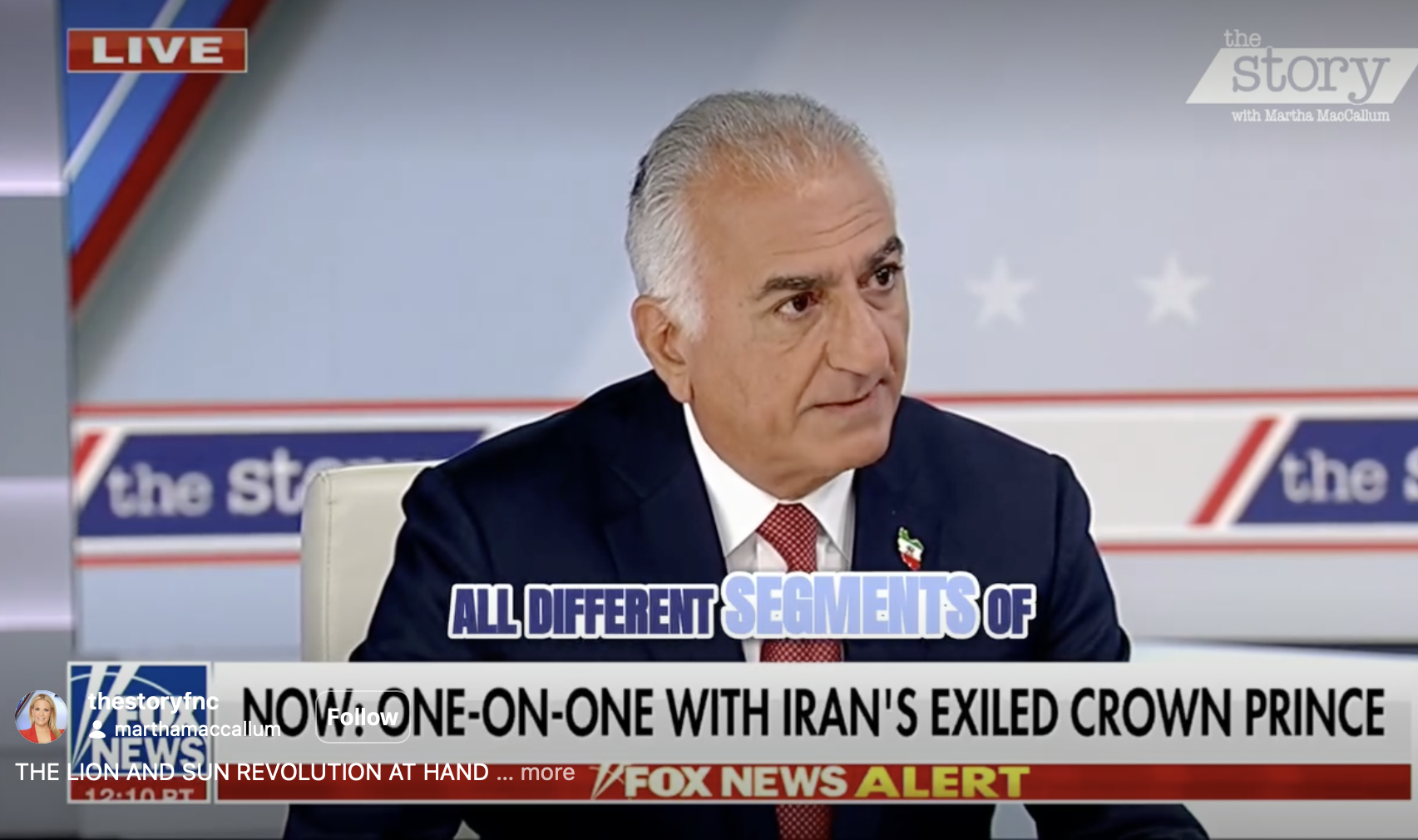
Later that day, the Crown Prince sat down in studio with Martha MacCallum. They had just watched President Trump address the General Assembly, with Iran's delegation sitting stone-faced as the President spoke of the regime's annihilation.
MacCallum asked whether the President's point got across. The Crown Prince answered that President Trump has always wanted peace and stability, and so do millions of Iranians. But "as long as this regime continues to exist, peace cannot be attained." Its survival depends on repressing its people at home and bullying the world through proxies abroad.
Then he said it again, to a national audience this time. The people who fell "didn't die for a strait to remain open or for a nuclear deal. They died for liberty." And he warned that the regime is doing what it has always done: buying time, "hoping to brace and survive the Trump administration" so it can fool the next one into treating it as a legitimate partner.
What happened to the uprising?
MacCallum put the hard question to him directly. When the President told Iranians "your hour of freedom has come," and the Supreme Leader fell, many assumed freedom was right around the corner. So what happened?
His answer was honest, and it showed a man changing his thinking. For years he preached civil disobedience and nonviolence. But the massacre of January 8th and 9th proved that this regime will kill "without any remorse tens of thousands of people, maybe even in the millions, just to survive." "So we have to adjust to that reality."
The change cannot come only from strikes from outside, he said. "It has to translate to some force from within." Iranians have been fighting defenseless against a regime that shoots them in the streets, and they need the chance "to equalize the playing field." He praised Treasury Secretary Bessent for tightening the economic squeeze on the regime, then said what is still missing: direct support for the Iranian people themselves. "These brave young kids are willing to fight and die for their cause. They cannot stand alone."
Once again he said no American boots and no American tax dollars. "The boots on the ground are the people of Iran themselves." The funding would come from the Iranian people's own frozen assets.
When MacCallum pressed him on the practical details, arming and training, he held the line with care: "sensitive discussions that we cannot openly discuss, but when there's a will, there's a way." He added that America would not have to do it alone. Regional partners tired of Iranian missiles hitting their high-rises have every reason to help. "The regime itself is the threat," he said. Remove it, and it is "the end of the problem and the beginning of the recovery."
Answering Pezeshkian
MacCallum played a clip of the regime's president, Masoud Pezeshkian, accusing the West of blockading Iran to force its people into submission. The Crown Prince wasn't surprised. In a country run de facto by the IRGC, he explained, any official with even a moderate tone is accused of betraying the system. So they play the part: we tried, the other side was stubborn.
"The reality is that this regime has its back to the wall. It is desperate. Every day somebody is standing to be executed in Iran." The end begins, he said, when the sanctions bite hard enough that the regime can no longer pay its mercenaries, and when governments start shutting its embassies and expelling its diplomats. At that point, the people can rise.
A message for the Gulf
MacCallum mentioned that General Jack Keane had told her earlier that the Gulf states need to "man up" and help finish this. The Crown Prince, who speaks regularly with leaders in the region, reframed it. It isn't a question of manning up. It's a question of clarity. "Something started earlier this year. Everybody's looking for the endgame. And the endgame, I think, is the Iranian people liberating themselves."
What the region needs from Washington is a clear signal. "Are we real this time? Can we not be hesitant?" Is it confrontation or negotiation? "Which one is it?"
"Civil war"? Not in the Iran I know
Finally, MacCallum raised a claim she'd heard from someone in the region: that toppling the regime would plunge Iran into civil war, and that the February 28th attacks had stirred up a wave of nationalism behind it.
The Crown Prince answered with what he has seen with his own eyes. When he called Iranians into the streets, millions answered across all 31 provinces. They came from every ethnic group, every religion, and every part of society, all chanting for the end of this regime. "That's unity at its best."
It is the regime, he said, that "planted the seed of antagonism." Iranians lived together in peace for centuries, whatever their ethnicity or faith, and once free, they will again.
He closed with the words every Iranian watching was waiting to hear:
"The Lion and Sun revolution is at hand."
The Mayor's Selective Outrage
While the Crown Prince was making his case, the men he is fighting were settling into Manhattan.
Days before the Assembly opened, the State Department granted visas to the Islamic Republic's president, Masoud Pezeshkian, and its foreign minister, Abbas Araghchi, along with their core delegation. It called the decision "consistent with our obligations as host country." This comes nearly seven months into a war between the United States and Iran, while the regime's missiles still fall on our allies in the Gulf. So the officials of a government at war with America walked into New York through the front door.
The State Department's hands are tied by treaty. The Mayor of New York City has no such excuse.
Mayor Zohran Mamdani has spent this week calling Israeli Prime Minister Benjamin Netanyahu a "war criminal" and the "architect" of genocide, declaring him unwelcome in our city and repeating his call for Netanyahu's arrest. When the President of the Islamic Republic arrived in the same city, the mayor went quiet. No arrest threats. No press conferences. No outrage.
Look at what that government did this year alone. On January 8th and 9th, the regime turned its guns on its own people. Tehran's official count is 3,117 dead. The Human Rights Activists News Agency has verified more than 7,000 deaths by name, with nearly 12,000 more cases still under review. Doctors inside Iran counted roughly 30,000 deaths in hospital records alone. Leaked government documents reported by Iran International put the toll at about 36,500. The Crown Prince puts it at 40,000 slaughtered in one night. And the executions have not stopped. Teenagers have been hanged for protesting, and, as the Crown Prince told Fox, somebody is standing to be executed in Iran every day.
Masih Alinejad said it best: "Mayor Mamdani, you said war criminals who set foot in New York should be arrested. Good news. One is in New York City this week."
Principles that apply only to the Jewish state are not principles. Mr. Mayor, the Iranian New Yorkers in your city noticed your silence. So did I.
Two Irans in one city
What made this week remarkable was the contrast.
The very next day, the regime's president, Masoud Pezeshkian, stood at the podium of the General Assembly. He held up photographs, called his government a victim, and insisted, "We are not terrorists." When he accused the United States of murdering Iranian civilians and children, the American delegation walked out. He vowed that Iran would fight on. He was the voice of a regime nearly seven months into a war, speaking for a system that has spent forty-seven years chanting death to the very country hosting him.
The day before, on a stage a few blocks away and in a Fox News studio, a man with no army, no state, and no seat at the UN spoke for 93 million people. He asked for no troops and no tax dollars. He asked the free world to stop betting on the regime and start betting on the Iranian people.
One man spoke for a government. The other spoke for a nation. History will remember which one was telling the truth.
The other rally
The same day Pezeshkian spoke, another crowd gathered at Dag Hammarskjöld Plaza outside the UN. It was a rally organized by the National Council of Resistance of Iran, the political front of the Mujahedin-e Khalq, the MEK. Former New York Mayor Rudy Giuliani took the stage and told the crowd, "The MEK is stronger today than it ever was." Speakers attacked the Crown Prince by name, and the rally's slogan rejected "the Mullahs" and "the Kings" in the same breath. At some point a fight broke out among Iranians outside the UN. Video of the chaos spread quickly online, and accounts of who started it differ.
Americans deserve to know who the MEK is. It was founded in the 1960s on a blend of Marxism and Islamism: a communist-Islamist cult of revolution that helped bring Khomeini to power in 1979 and killed Americans in Iran along the way. When the mullahs turned on them, they fled to Iraq and did the unforgivable. They took up arms alongside Saddam Hussein, the man who invaded our country, and in the final days of the Iran-Iraq War they marched into Iran under Saddam's protection to fight their own countrymen. For fifteen years, from 1997 to 2012, the United States listed them as a terrorist organization. Most Iranians have never forgiven them, and they never will. Giuliani has spoken for them on stages around the world for years. A New Yorker should know better.
Here is what troubled me most this week. Much of the media gave the MEK's rally and the fight outside the UN more attention than it gave the Crown Prince's words at Concordia. The man millions of Iranians called for by name in the streets got less coverage than a group most of them reject. The exception was Fox News, which gave him the studio and let him speak.
Iranians inside the country know the difference, even if the cameras don't.
Are you standing with him?
The question the Crown Prince left on that stage isn't only for presidents and prime ministers. It's for all of us in the diaspora, and for every American who believes in liberty.
The boots on the ground are Iranian. The courage is Iranian. The sacrifice has already been paid, forty thousand times over. What they ask of the free world is to stop throwing them under the bus, to stand with them, and to believe them when they say what they want.
I believe them. I always have.
May God protect the young man in that cell, and every Iranian who has risked everything for a free homeland. And may we live to see the day when the flights run again from Tehran to Tel Aviv, from Tehran to New York, and the whole world can come home to Iran.
Always in solidarity. Always for freedom.
Sincerely, آیین